Most people will never expect it. Someone collapses at a store, a ball game, or right at home. Their heart has stopped. This is called cardiac arrest, and it happens to about 350,000 people outside of a hospital each year in the United States. Sadly, it ends in death about 90% of the time.
Here is the good news: a bystander can change that outcome. When someone gives CPR before help arrives, the person’s chance of survival can double or even triple.
You do not need to be a nurse or a paramedic to help. Hands-only CPR is simple, and almost anyone can do it.
How hands-only CPR works
- Check if the person responds. Tap them and shout. If they do not answer and are not breathing normally, act fast.
- Call 911. Put your phone on speaker so the dispatcher can guide you.
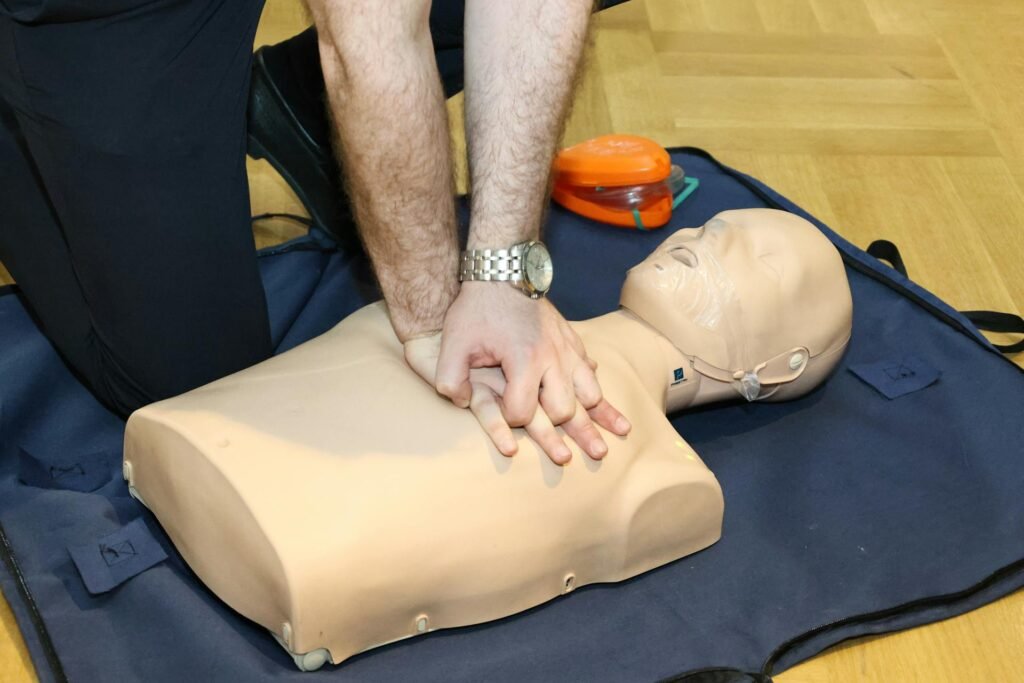
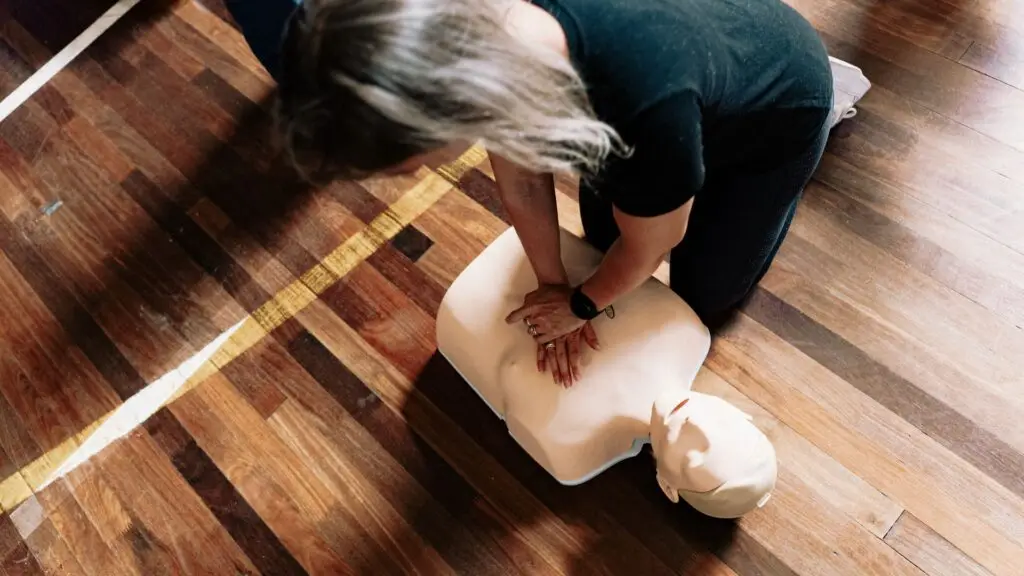
- Push hard and fast in the center of the chest. Aim for about 100 to 120 pushes a minute. A good rhythm to follow is the beat of the song “Stayin’ Alive.”
- Do not stop until help arrives or an AED is ready to use.
Every minute without CPR drops the chance of survival by 7% to 10%. When CPR starts in the first few minutes, survival can climb to 40% or higher. Speed truly matters.
What is an AED?
An AED, or automated external defibrillator, is a small machine that can restart a heart with a safe electric shock. You will find them in many schools, gyms, airports, and offices. An AED talks you through each step out loud, so you do not have to guess. Turn it on, place the pads as shown, and let the machine do the rest.
Want to feel ready?
Reading about CPR is a great start, but hands-on practice builds real confidence. Medics Wisconsin offers CPR and AED classes for individuals, workplaces, and community groups right here in the Fox Valley.
This article is for general education only and is not medical advice. Always call 911 first in an emergency.